

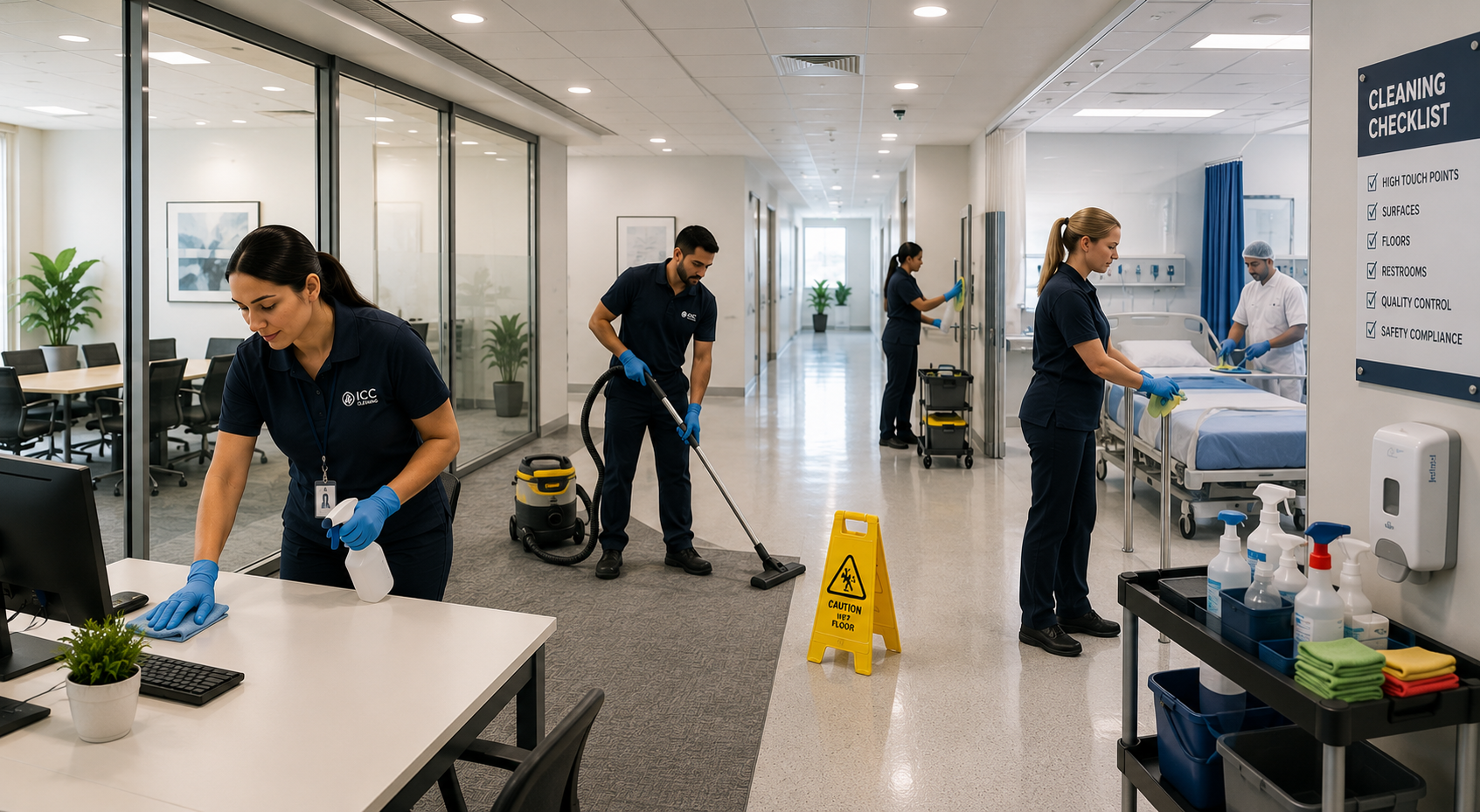
Industry-Specific Commercial Cleaning Standards in Australia
Depending on their operational hazards, different sectors need different cleaning strategies. Strict infection control is required in healthcare facilities, and food safety regulations must be met by hospitality establishments. For the welfare of its employees, offices, including those looking for commercial cleaning North Melbourne, often place a high priority on routine maintenance and hygiene.
In a similar vein, companies that need commercial cleaning in West Melbourne could concentrate on managing busy areas and maintaining a consistent appearance. Skilled commercial cleaning specialists are aware of these subtleties and tailor their services accordingly.
What Are Commercial Cleaning Standards?
Commercial cleaning standards kind of refer to a set of structured guidelines and procedures intended to keep workplaces cleaned, sanitised, and kept at a consistent compliant level. In practice, they tend to be more than just “tidy enough.” They really concentrate on hygiene, safety, and also regulatory compliance across different industries.
Basic cleaning vs compliance-based commercial cleaning
Compared with basic cleaning that’s just general dusting, vacuuming, and waste removal, compliance-based commercial cleaning follows defined protocols. It also uses approved cleaning chemicals, and it follows the relevant safety rules. So, it’s not only about how the place looks, it’s more about making sure the area is hygienically safe for occupants, even in the places people don’t usually notice.
Why must Australian businesses follow structured cleaning procedures?
Why must Australian businesses follow structured cleaning procedures?
How do standards vary depending on industry and risk level?
The cleaning standards are there to help reduce liability risks and to support a duty of care toward both employees and customers. Requirements can shift quite a lot depending on the sector, like healthcare and food environments. These sectors usually demand stricter routines than a general office does because the risk profile tends to be higher.
Core Principles of Commercial Cleaning
Effective commercial cleaning kind of relies on a few core ideas, so hygiene and safety stay in check all the time.
Why Cleaning Standards Are Important for Businesses
Keeping up with correct cleaning standards isn’t only about visual appearance. It’s also associated with safety, compliance, and the way the business runs overall.
Protecting employees, customers, and visitors
A tidy environment minimises contact with harsh substances and common allergens. It makes sure that anyone who walks in feels safe and at ease.
Reducing germs, bacteria, and infection risks
Ongoing and well-planned cleaning helps keep illnesses from spreading too fast. This becomes even more important in shared areas or places with constant foot traffic.
Creating safer work environments
When spaces are clean, they tend to reduce hazards like slipping, dust building up, and surface contamination. Less of that generally means fewer accidents on the job.
Supporting workplace health and safety obligations
Under Australia’s strict safety laws, businesses must comply with strict legal requirements. The way your workplace is cleaned supports the way you meet those legal obligations.
Maintaining professional presentation and brand reputation
A well-maintained workplace gives off a more professional, attentive vibe. It also leaves a strong, positive impression on clients and other key stakeholders.
Who Regulates Commercial Cleaning Standards in Australia?
Commercial cleaning in Australia is governed by various authorities and regulatory frameworks, ensuring that companies uphold high standards.
● Work Health and Safety (WHS) regulations
These regulations guarantee a safe and risk-free workplace. Maintaining compliance is mostly dependent on cleaning.
● Safe Work Australia guidelines
They offer nationwide occupational safety policies. These suggestions are in line with cleaning requirements.
● National Quality Framework (NQF)
This mostly affects the education and childcare industries. It places a strong emphasis on safety and cleanliness for vulnerable populations.
● Food Standards Australia New Zealand (FSANZ)
For companies that deal with food, FSANZ establishes stringent hygienic regulations. Cleaning procedures need to adhere to these standards.
● Therapeutic Goods Administration (TGA)
TGA controls cleaning supplies and disinfectants. In commercial settings, only authorized items should be utilised.
● Aged Care Quality Standards
These guidelines concentrate on cleanliness in assisted living facilities. The health and well-being of residents are directly impacted by cleanliness.
● State-specific compliance requirements
There may be extra rules in each state. Local compliance requirements must be kept up to date by businesses.
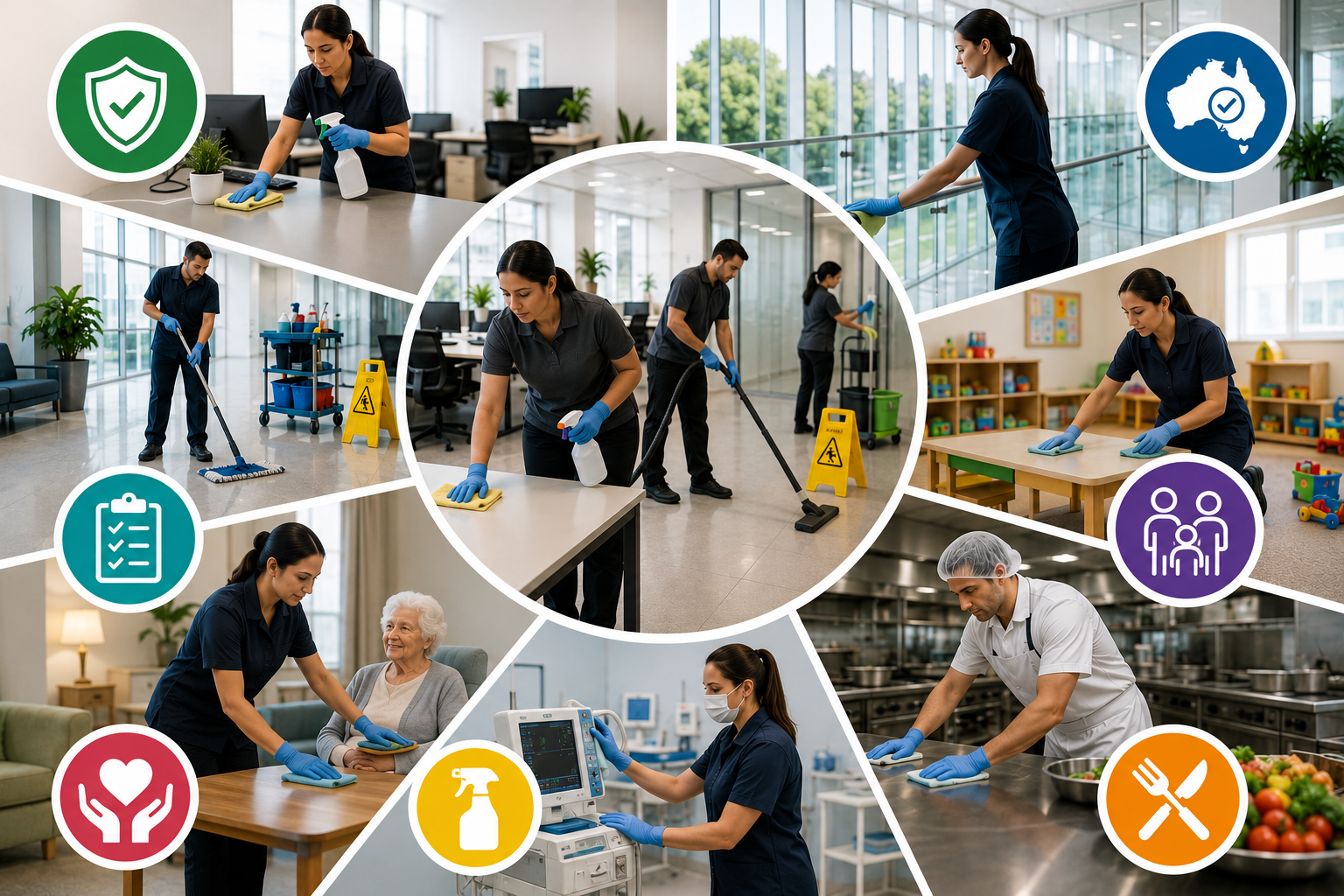
Quick Reference Guide: Cleaning Standards by Sector
| Sector | Key Regulator | Main Focus | Unique Challenge |
|---|---|---|---|
| Childcare | National Quality Framework | Daily cleaning of high-touch items, toy sanitation | Safe storage of chemicals away from children |
| Schools | State Education Department | High-touch surfaces, meeting rooms, bathrooms | Cleaning around student/staff presence |
| Aged Care | Aged Care Quality Standards | Daily high-touch surfaces, equipment between residents | Protection of vulnerable population |
| Corporate Offices | Work Health & Safety | High-touch surfaces, slip hazard prevention | Consumables like soap and towels |
| Food Manufacturing | FSANZ, HACCP | Equipment sanitation, storage areas | Preventing contamination throughout chain |
| Pharmaceutical | TGA, GMP | Documented procedures, contaminant prevention | Cleanroom environments and validation |
The Future of Commercial Cleaning Standards
Scientific research, technology advancements, lessons learned from global health crises, and environmental factors are all influencing the future of commercial cleaning. Eco-friendly materials, automation technologies, and data-driven cleaning techniques are becoming highly popular among businesses.
Perceptions about cleaning myths in Melbourne are also changing as a result of this progress, assisting organisations in adopting more knowledgeable and efficient procedures while striking a balance between sustainability and hygiene.
Contact Us Today for a Free Quote
Transform your workplace today with Inner City Cleaning’s top-notch cleaning services. Contact our team for a free quote and experience the difference yourself.
FAQs
Yes, they are expected to stick to health and safety rules, which basically means maintaining a properly clean and safe environment.
Honestly, it depends on the type of business and how busy it is, like foot traffic. Still, having regular scheduled cleaning is usually the safer move.
Stricter regulations apply to the healthcare, food services, childcare, and elder care industries.
Sanitising lowers bacteria counts, while disinfecting destroys a wider range of microorganisms, more aggressively.
Commercial cleaning and infection control are important to prevent the potential spread of viruses/diseases. It helps in maintaining a healthy workplace to protect employees and clients alike.
Offices have to follow WHS guidelines and keep up general hygiene standards, like routine cleaning, waste handling, and surface care.
They generally follow NQF guidelines with strict cleaning, as well as sanitisation protocols, not just “quick wipe and done”.
Yes! Eco-friendly commercial cleaning products are effective when they have been approved by the appropriate authorities. Plus, they must be used in accordance with the directions provided by the manufacturer.
Search for experienced providers, like Inner City Cleaning, who understand compliance and can deliver tailored solutions. Also, consider things like Commercial Cleaning Cost in Melbourne, because price, schedule, and quality all matter in the long run.